
Mine sites rarely have one fixed barricading requirement. Work areas move, maintenance activities begin and end, haul routes change and different crews may need access to the same part of the site at different times.
This makes selecting hard barricading about more than measuring the length of a boundary. The system also needs to suit the hazard, location, surrounding activity and way the work will progress.
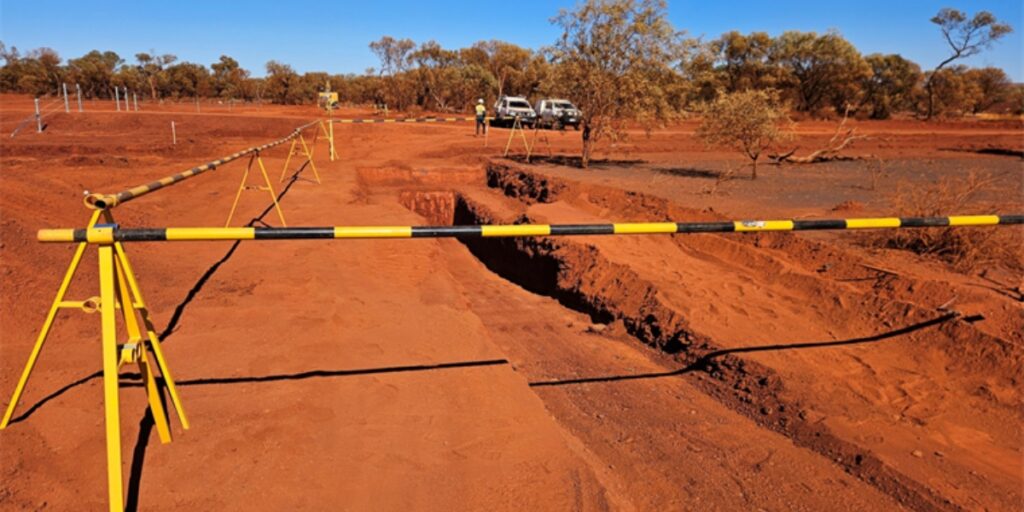
Hard barricading for mine sites can be used to restrict access around excavations, maintenance activities, shutdown work, fixed plant, lifting operations and other hazardous work areas across a mine site.
Start With the Purpose of the Barricade
Before selecting components, define what the barricade needs to achieve.
Is it being used to identify a restricted work area, separate personnel from a hazard, control entry to a maintenance zone or maintain a clear boundary around an excavation? Will the area remain in place for several weeks, or move as the work advances?
The answers affect the size, shape and level of access required. They also help determine whether hard barricading is suitable for the task under the site’s risk assessment and procedures.
Hard barricading creates a substantial physical boundary, but it should not automatically be treated as certified edge protection, a vehicle-impact barrier or a replacement for another engineered control. The selected system must be appropriate for the specific hazard and site requirements.
| Hard barricading could be used to create restricted work areas around |
| Excavations, trenches and open pits |
| Fixed plant maintenance and repairs |
| Shutdown work areas |
| Crane operations and suspended loads |
| Confined space entry points |
| Electrical maintenance and energised equipment |
| Hot work, welding and cutting |
| Equipment testing and commissioning |
| Hazardous material handling or spill clean-up |
| Mobile plant operating or maintenance areas |
| Damaged structures or unsafe equipment |
| Temporary floor openings and incomplete structures |
| Areas where equipment has been isolated or locked out |
| Unauthorised access points around processing facilities |
Consider People, Plant and Nearby Activity
Mine sites bring people, vehicles, mobile plant and equipment into close proximity. A barricading layout needs to account for how each will move around the work area.
Consider every direction from which the barricade could be approached. A boundary that is obvious from one walkway may be less visible from a vehicle route, adjacent work area or access road. Lighting, dust, weather, blind corners and equipment can also affect visibility.
Where pedestrians and mobile plant operate nearby, the barricading should form part of the broader traffic and site management plan. Eureka hard barricading is designed to control pedestrian access to work areas. It is not a speed-rated traffic barrier and should not be positioned as vehicle-impact protection.
Plan the Complete Layout
Straight runs are only one part of a barricading layout. Many mine-site work areas require corners, changes in direction, intersections or an opening for authorised access.
Eureka’s 2-Way Fixed Twin Rail Barricade Legs are suited to straightforward continuous runs. Where the layout needs to turn, branch or follow an irregular work area, 4-Way Swivel Barricade Legs can create corners, T-sections, Y-sections and four-way intersections.
A mixture of fixed and swivel legs may provide the most practical setup. The aim is not to use the same component everywhere, but to build a consistent boundary that follows the actual work area.
Choose Pole Lengths Around the Site
Eureka Heavy Duty Barricade Poles are available in 2.9m and 5.8m lengths.
Longer poles can cover open, straight areas with fewer components. Shorter poles provide more flexibility around confined areas, equipment, corners and shorter sections. Many sites benefit from carrying both sizes so the system can be adjusted without improvised gaps or extensions.
The right mix will depend on the planned layout as well as practical handling and storage requirements. Our guide to 2.9m vs 5.8m barricade poles explains the differences in more detail.
Provide a Clear Access Point
If workers need to enter the barricaded area, the access point should be planned as part of the original layout.
Leaving a loose pole, creating an informal gap or expecting personnel to climb through the barricade weakens the boundary and makes access harder to control. Eureka’s Heavy Duty Barricading Gate creates a designated entry point through continuous hard barricading.
The gate location should suit the work being carried out and direct authorised personnel to a clear, visible entry. Any required signage, authorisation or isolation process should then be applied in line with site procedures.
Think Beyond the First Installation
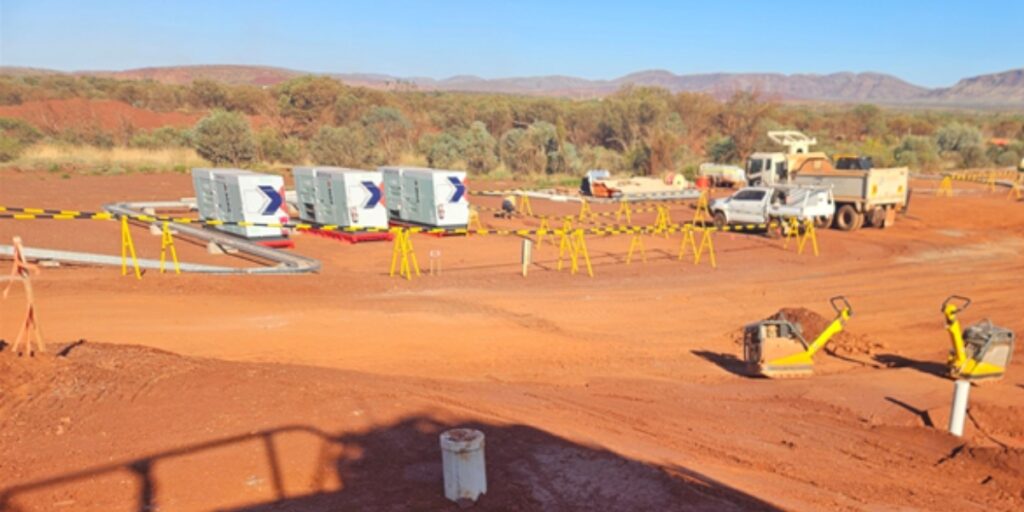
Mine-site barricading is often relocated and reused. The system may need to move to another section of the project, expand around a larger area or return to storage between activities.
Planning for this from the beginning makes the equipment easier to manage. Purpose-built pole and leg stillages keep compatible components together, while Eureka’s Mobile Barricade Storage and Deployment Trailer provides a way to transport a complete system between work areas.
Organised storage also makes it easier to see what is available before the next deployment. Missing legs, poles or gates can be identified before the barricading reaches the work front.
Match the System to the Site
Effective hard barricading for mine sites starts with the job, not a standard component count. The hazard, surrounding activity, layout, access requirements, installation period and future relocation all influence the right setup.
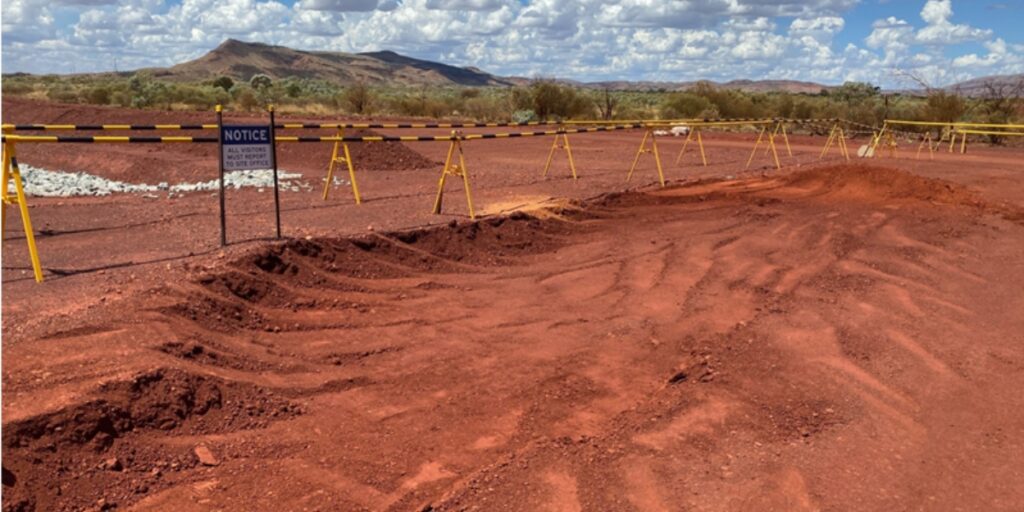
Eureka’s modular Hard Barricading System allows poles, A-Frame legs, gates and storage options to be selected around those requirements.
Get the Right Barricading Setup
Contact Eureka Barricade Systems for help planning a hard barricading system for your mine site or project.