
Temporary fencing and hard barricading both create a physical boundary, but they are generally selected for different site-control tasks.
Temporary fencing is commonly used to secure a perimeter or separate a larger area. Hard barricading is commonly used to form a clearly defined boundary around a specific work zone, hazard or restricted area.
Choosing between them starts with understanding what the barrier needs to achieve.
What Is Temporary Fencing Used For?
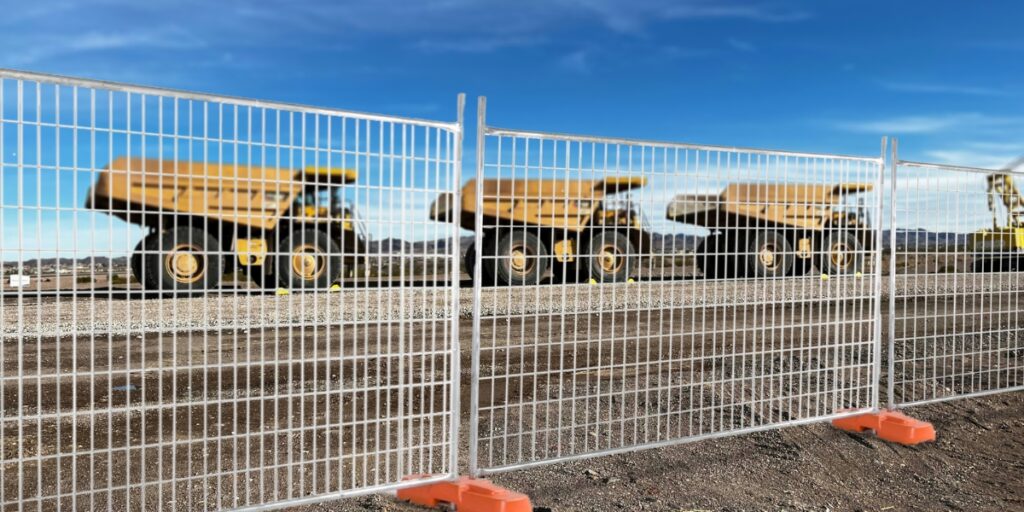
Temporary fencing uses full-height galvanised steel mesh panels connected with clamps and supported by purpose-built feet. Stays can be added where additional support is required, and pedestrian or vehicle gates can be incorporated to manage entry.
| Common Temporary Fencing Uses |
| Construction and project perimeters |
| Unauthorised-access control |
| Separating public areas from worksites |
| Securing equipment or material storage areas |
| Creating longer-term temporary boundaries |
| Establishing controlled pedestrian and vehicle entry points |
The height and continuous mesh surface make temporary fencing suited to areas where people need to be discouraged from climbing over or entering the site. It can also help screen the work area and provide a defined outer boundary around a project.
Temporary fencing is still a system, not just a row of panels. Feet, clamps, stays and gates all play a role in creating an appropriate setup. Ground conditions, wind exposure, attached signage or shade cloth, and the length of the fence run should be considered when planning the installation.
What Is Hard Barricading Used For?
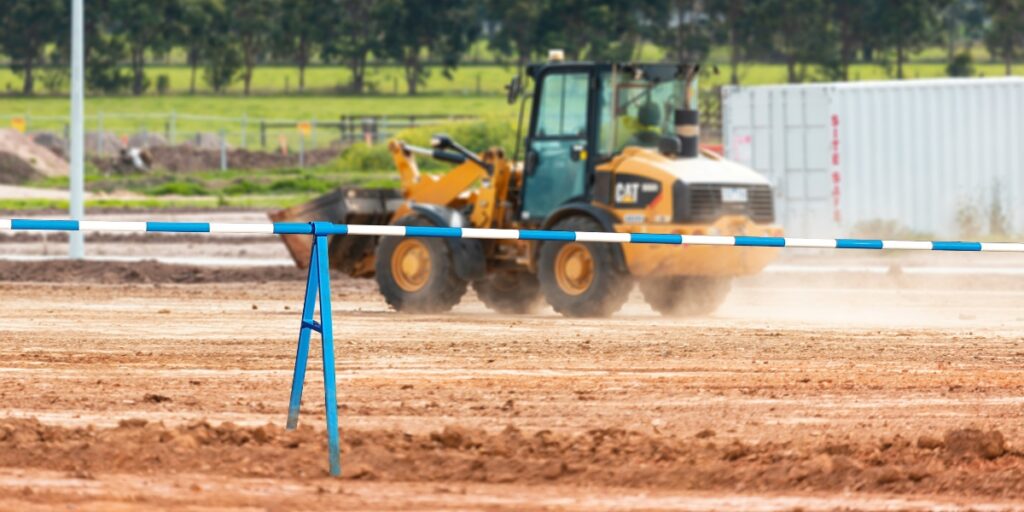
Hard barricading uses rigid poles supported by A-Frame legs to create a substantial, highly visible boundary. The system can be installed in straight runs, formed around corners and fitted with a gate for designated access.
| Common Hard Barricading Uses |
| Trenching and excavation work |
| Maintenance and shutdown areas |
| Restricted plant or equipment zones |
| Temporary hazards |
| Active work areas within a larger site |
| Changing exclusion zones |
Unlike a full-height fence, hard barricading allows visibility across the work area. This can be useful within operational sites where crews need to maintain awareness of surrounding activity while keeping a clear physical separation in place.
Eureka’s system is also modular and relocatable. Poles, legs and gates can be rearranged as the work area changes, making it practical for sites where the restricted zone will not remain in one fixed position.
The Main Difference: Perimeter or Work Zone
The clearest way to compare the two is to consider the type of area being controlled.
Temporary fencing is often the stronger choice for securing the outer perimeter of a site or restricting unauthorised entry into a larger area. Hard barricading is often better suited to defining a hazard, work zone or controlled area within the site.
For example, a construction project may use temporary fencing around the property boundary and hard barricading around an excavation inside that boundary. A mine site may use temporary fencing to secure a compound while using hard barricading around maintenance work or a temporary restricted zone.
The two systems are not necessarily alternatives. On many projects, they perform different roles at the same time.
Questions to Ask Before Choosing
Before selecting temporary fencing or hard barricading, consider:
If the boundary is exposed to the public or people who are unfamiliar with the site, a full-height temporary fence may provide more suitable access control. Within a controlled workplace, hard barricading may provide the defined physical separation required around a specific area.
A complete site perimeter has different requirements from an internal maintenance zone. Be clear about whether the barrier is securing a broad area, marking a work zone or restricting access to a specific hazard.
Temporary fencing can suit both short and longer-term perimeters. Hard barricading can be particularly useful where the boundary will move or change throughout the work.
Both systems can incorporate gates. The required opening size, frequency of use and type of traffic should guide the gate selection.
Mesh fencing creates a tall, continuous boundary. Rail-style hard barricading provides an obvious physical restriction while retaining open visibility across the area.
If the work zone must be frequently expanded, reduced or relocated, modular hard barricading can make those changes easier. If the boundary is expected to remain stable, temporary fencing may be the better fit.
Do Not Choose by Product Name Alone
“Hard barricading” does not mean that a system is automatically suitable for every high-risk application. Likewise, temporary fencing should not be assumed to provide impact protection simply because it forms a full-height boundary.
Neither system should automatically be treated as engineered edge protection or a vehicle-impact barrier. The selected equipment must suit the identified hazard, site risk assessment, ground conditions and applicable project requirements.
Where there is any uncertainty, the intended use should be reviewed before the barrier is installed.
Build the Barrier Around the Job
Choose temporary fencing when the priority is securing a perimeter, restricting broader access or creating a full-height temporary boundary. Choose hard barricading when the priority is establishing a visible, relocatable physical barrier around a work area or hazard.
If the site needs both perimeter security and internal work-zone control, the right solution may include both systems.
Explore Eureka’s Temporary Fencing and Hard Barricading ranges, or contact Eureka to discuss the requirements of your site.